Gallery
08
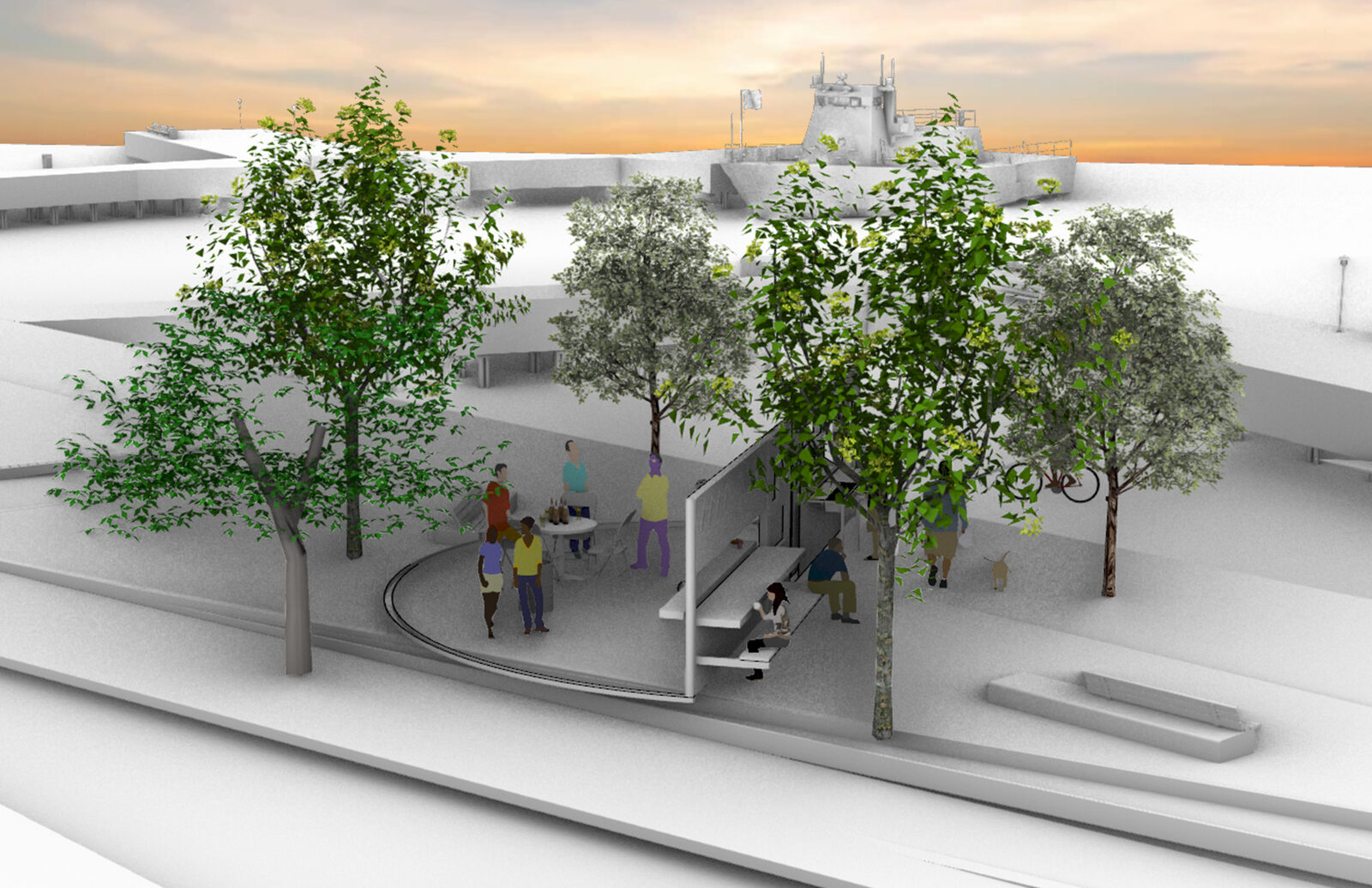
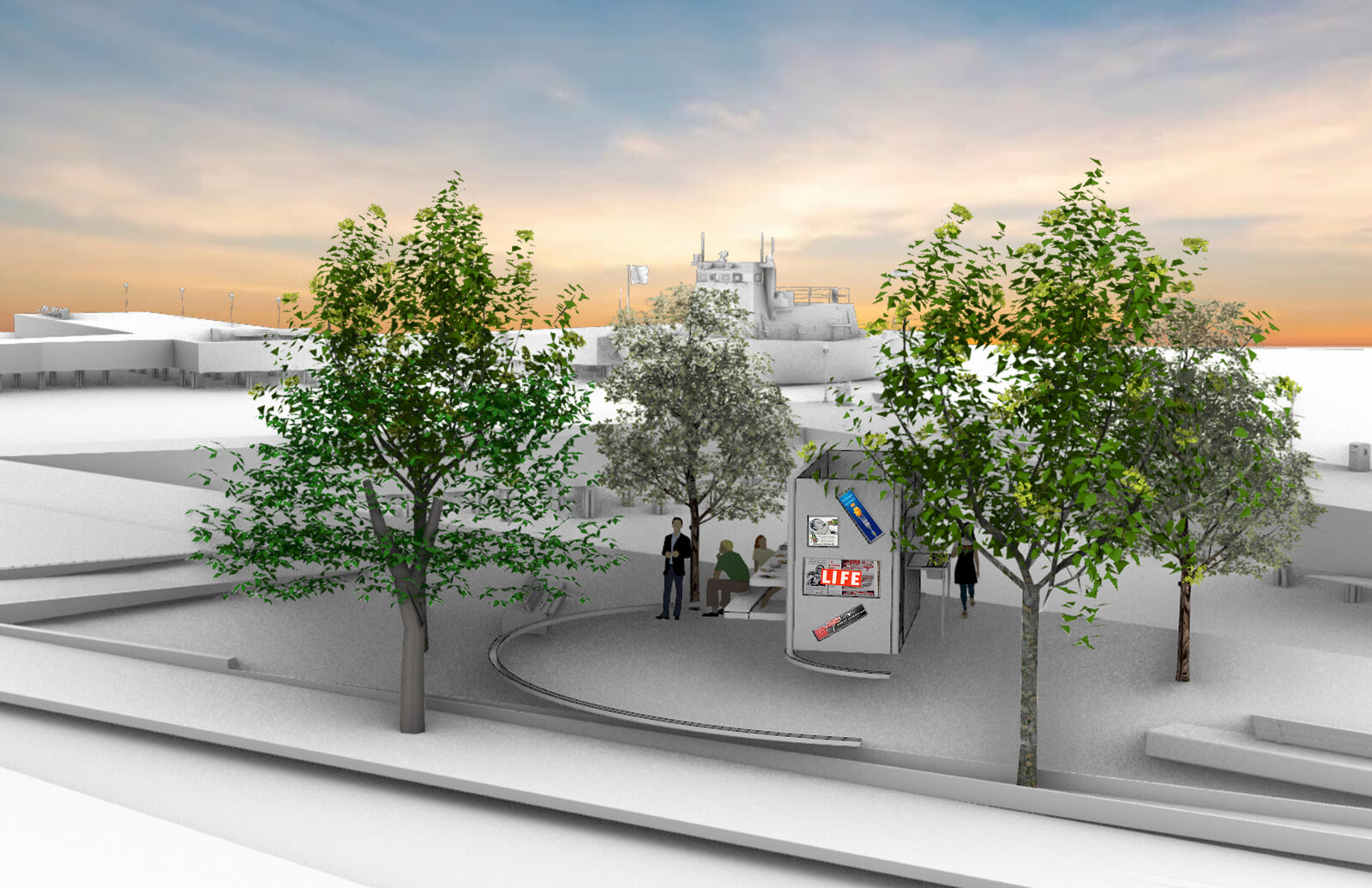
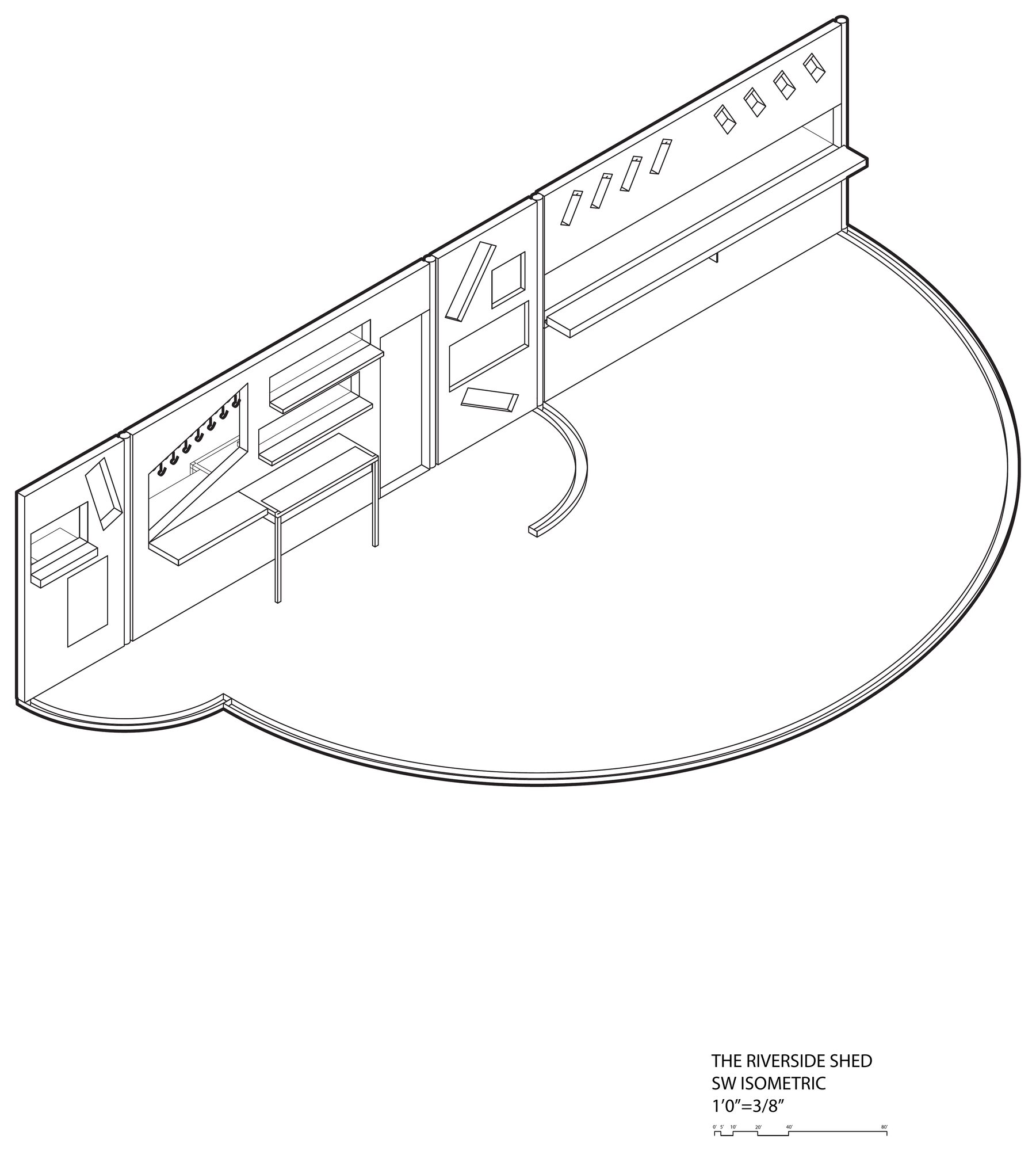
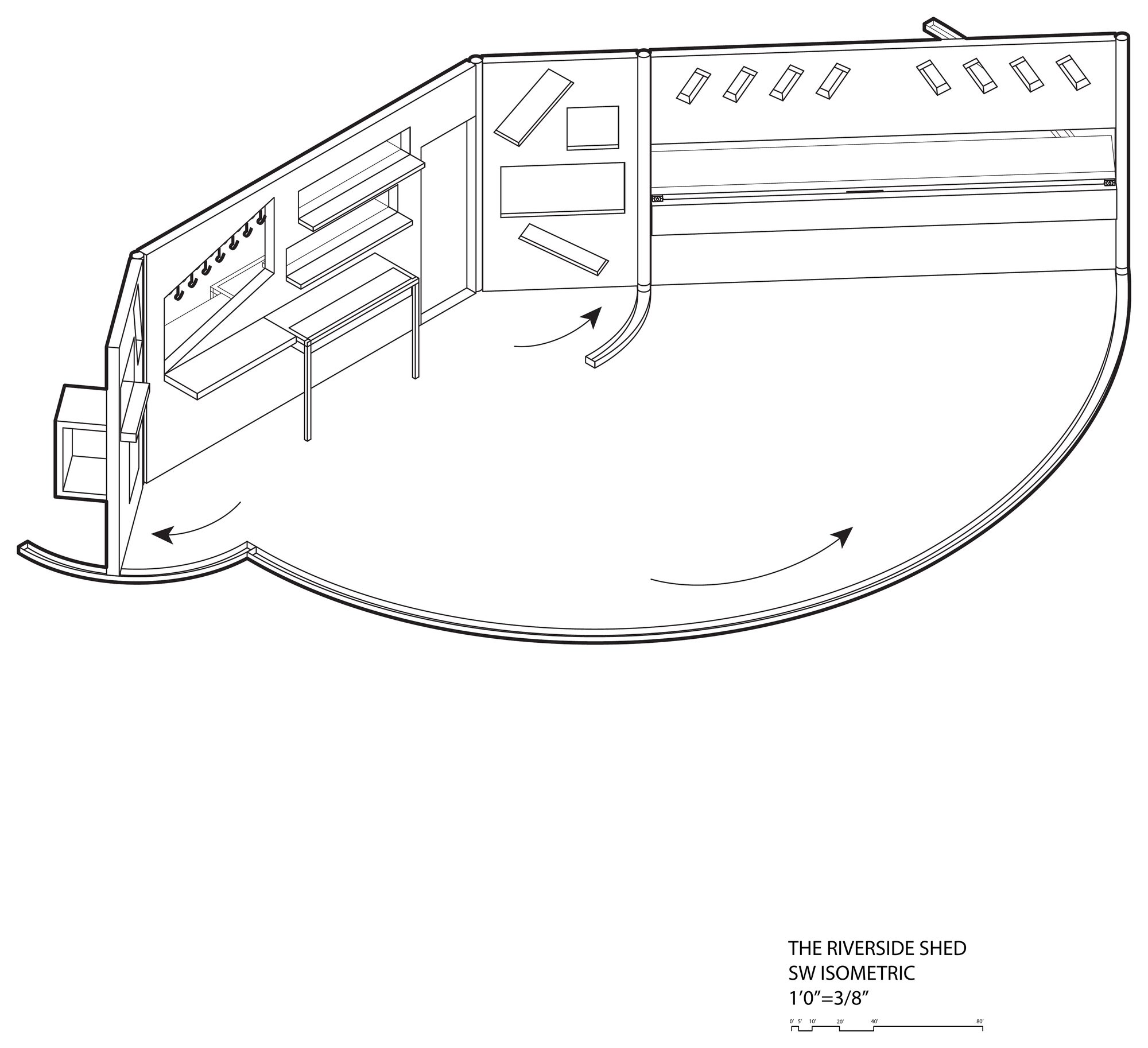
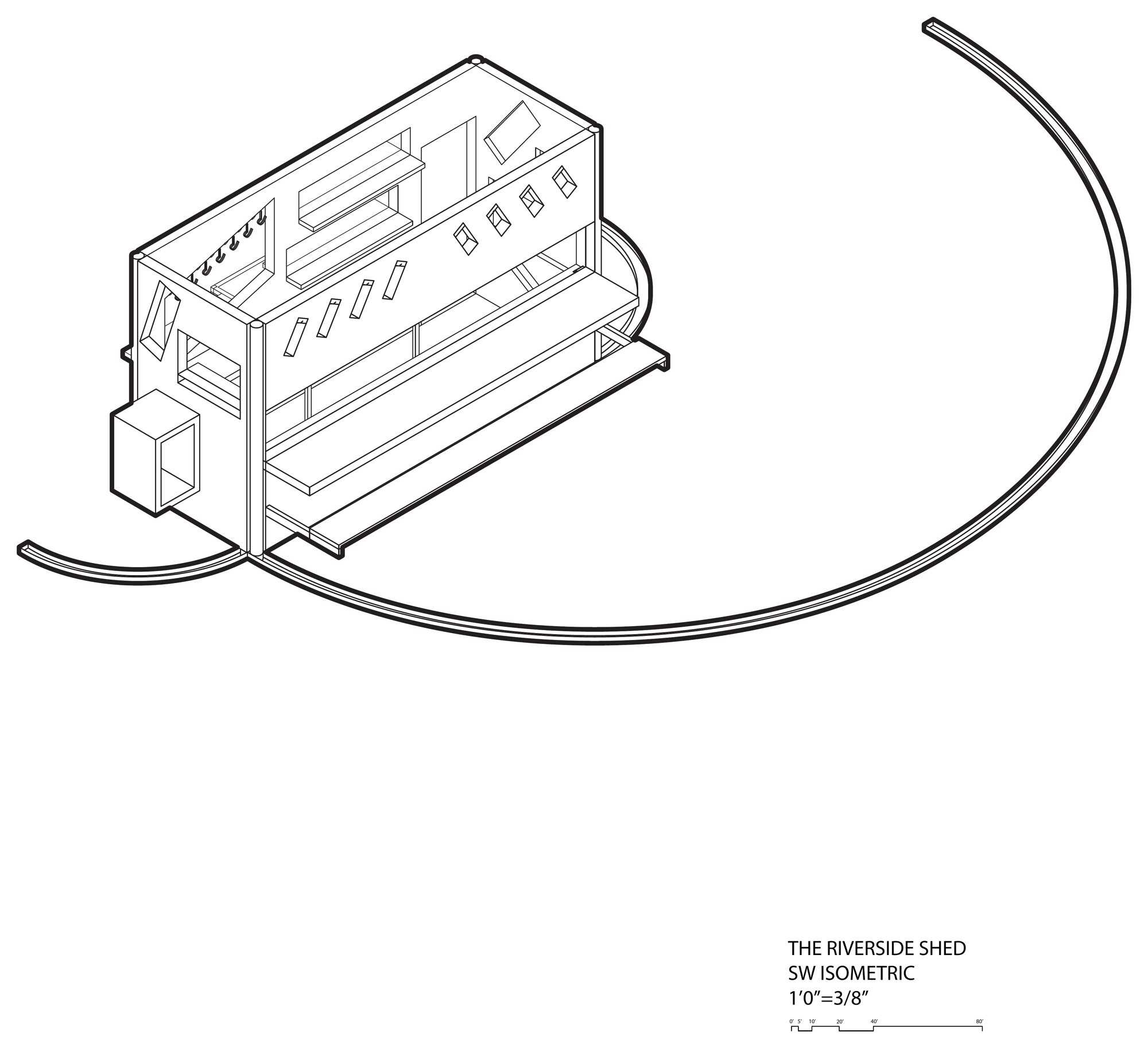
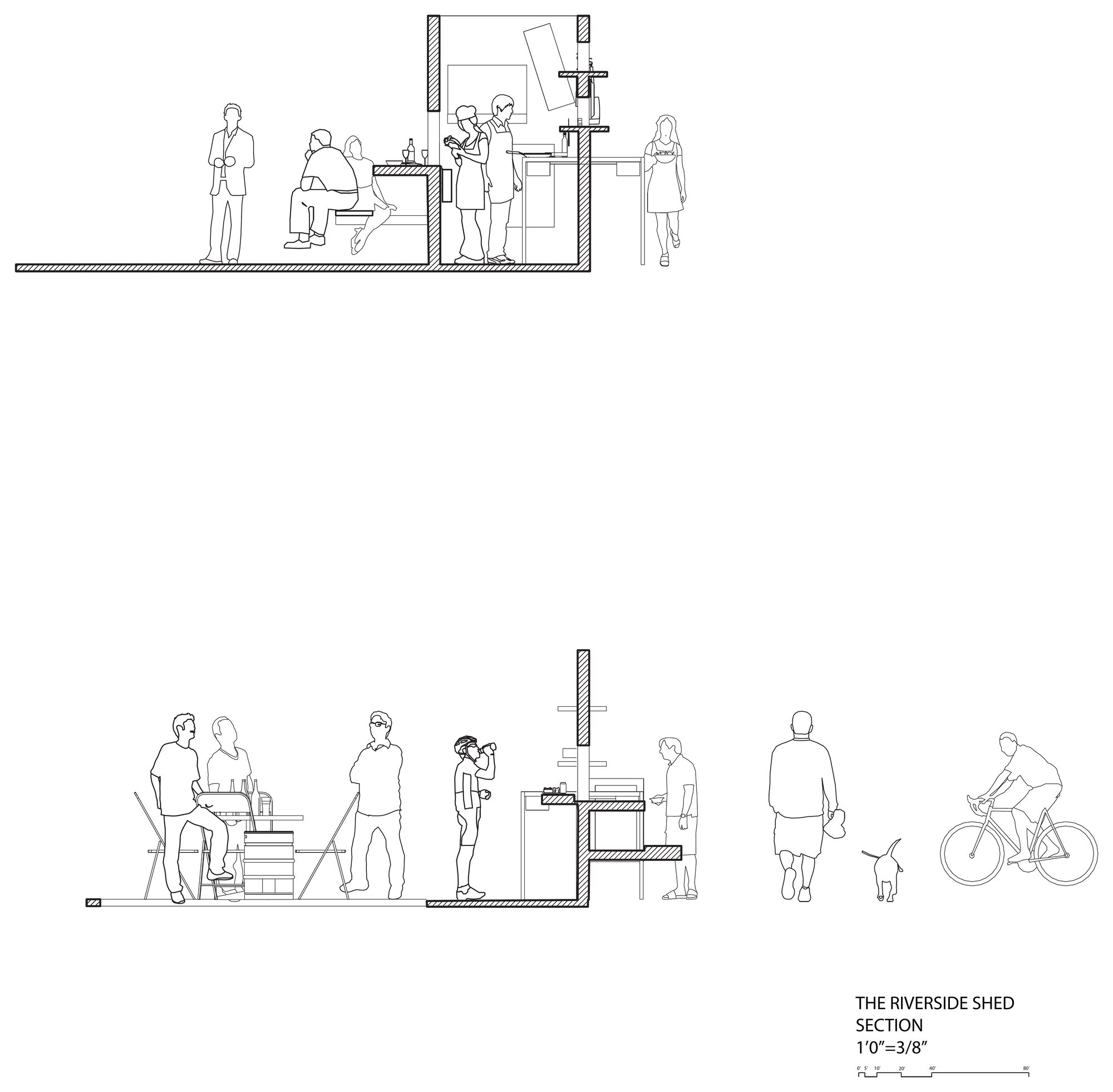
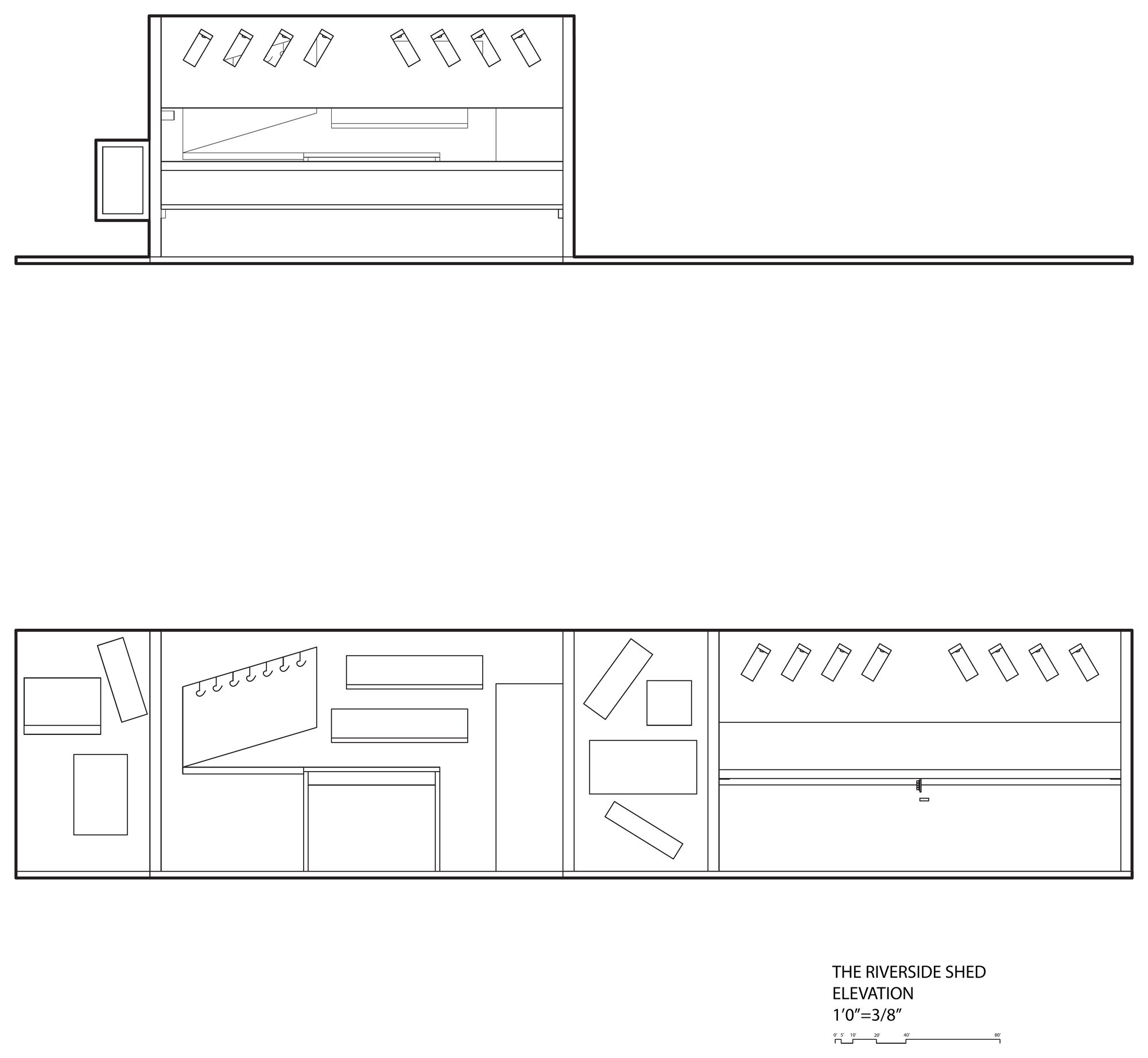
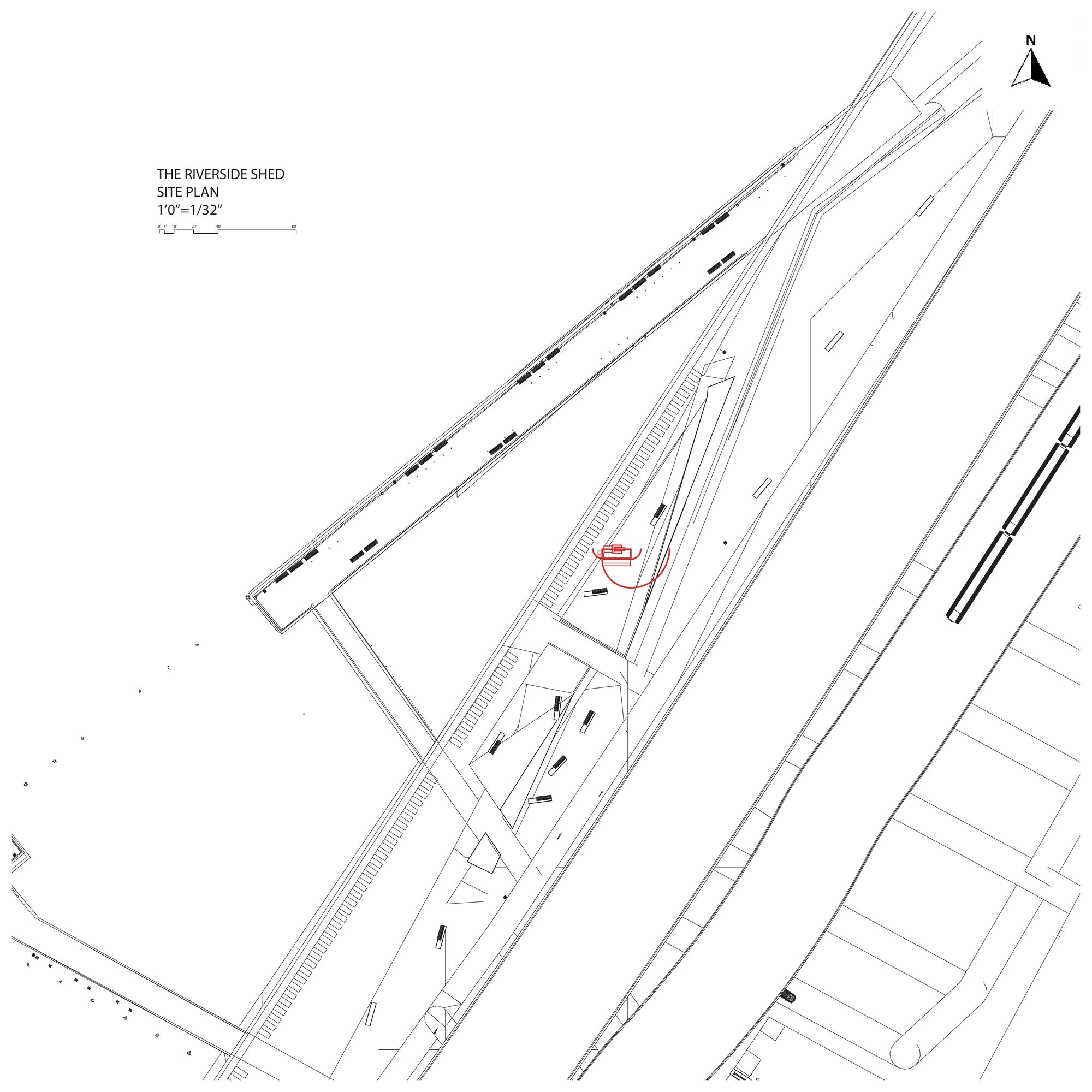
Tasked with designing a structure for the Harlem Pier, my solution was the Riverside Shed, a structure simultaneously imposing in nature and yet personal in practice. Inspired by the community and sense of humanity that a small bubble tea store gave me, I sought to recreate that feeling. Living in New York all my life, I have always been fascinated by why people were drawn to the parks on the Hudson past Riverbank Park. Why not gather lower down in Manhattan? One day, I smelled it — I could smell charcoal burning, and I realized that the opportunity to eat together brought people together.
It is hard to balance the dichotomy of the public and private, the impersonal and personal, the clashing of swords that constantly echoes through the city streets. Peter H. Wiederspahn writes in Mutable Domestic Space: The Choreography of Modern Dwelling about the Schroder House by Gerrit Rietveld, a home capable of transforming from private bedrooms to public living through the action of sliding doors on their colorful rails. Being human, it was a surprisingly iterative process to find what made a space personable. I realized it was the same thing that made a pointillist painting enjoyable; it is the composition of little points, which I translated as little windows. My object's double-sided nature allows people to interact subtly.
The structure can also close, become private and mysterious, yet still maintain an element of community through the lack of hidden space. The closed space leaves people yearning for the wall to be opened and for them to have their public space. At the same time, the open space leaves those who enjoy their private park restaurant yearning for more. The structure represents human desire — the desire to be wanted and to feel part of something.